Toyota Corolla 2026 Review Is It Actually Worth Buying for Budget Buyers?
New Cars
|
March 22, 2026
The 2026 Toyota Corolla is not trying to impress you. It is trying to outlast everything else in your driveway, and for budget buyers, that distinction matters more than any flashy feature list.
At a starting price of around $22,050, it sits at one of the most competitive price points in the compact sedan segment. Here is whether it actually delivers.
What You Get for the Base Price
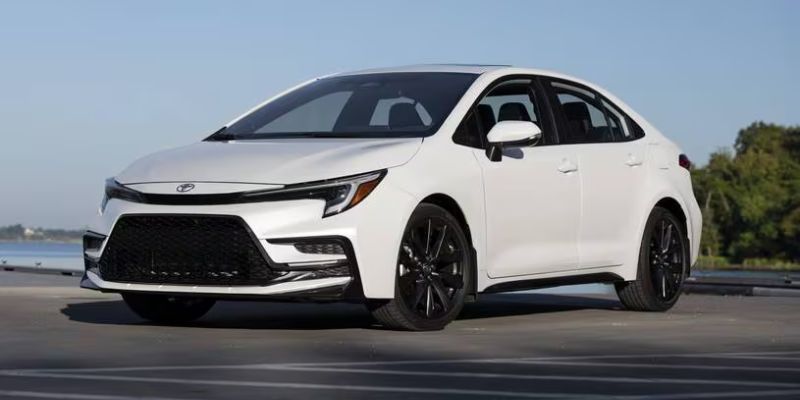
The 2026 Corolla LE starts at approximately $22,050 and includes a suite of features that would have required a mid-grade trim just four years ago. Standard equipment covers a 8.0-inch touchscreen, wireless Apple CarPlay and Android Auto, a pre-collision system with pedestrian detection, lane departure alert, automatic high beams, and radar-based cruise control.
That driver assistance bundle, called Toyota Safety Sense 3.0 [1], comes on every single Corolla trim without exception. Competing sedans from Honda, Hyundai, and Kia charge extra for equivalent packages on base trims or simply do not offer them as standard. For budget buyers, getting all of that safety technology at the base price is genuinely significant.
Trim Levels and Where the Value Actually Lives
The 2026 Corolla runs across five trims: LE, SE, XLE, XSE, and the top-spec Apex SE. The LE at $22,050 covers daily needs without feeling stripped. The SE at $24,025 adds sport styling, a sport-tuned suspension, and a more engaging driving character that changes the feel of the car noticeably.
The XLE at $26,150 is where comfort features arrive in force. Heated front seats, a power driver's seat, and SofTex leatherette upholstery make it feel considerably more refined than the base. For budget buyers stretching toward maximum value rather than minimum price, the XLE trim represents the strongest overall package relative to cost.
The Hybrid Option Changes the Entire Calculation
The 2026 Corolla Hybrid SE starts at $26,850 and returns approximately 52 MPG combined in front-wheel drive. That figure changes the monthly ownership cost conversation completely. A driver covering 15,000 miles annually at average U.S. fuel prices saves roughly $700 to $900 per year compared to a non-hybrid compact sedan returning 32 MPG.
Over five years, that fuel saving alone closes much of the price gap between the standard Corolla and the Hybrid. The Hybrid also qualifies for potential state-level incentives in several markets, which can further reduce the effective purchase price. For budget-conscious buyers thinking beyond the sticker, the Corolla Hybrid deserves serious consideration rather than a passing glance.
Engine and Performance: Honest Assessment
The standard 2026 Corolla uses a 2.0-liter naturally aspirated four-cylinder engine producing 169 horsepower. Zero to 60 mph takes around 7.8 seconds, which is adequate rather than exciting. Passing power on highway on-ramps requires planning ahead rather than confidence, which is a fair and honest criticism.
The CVT transmission keeps the engine in its efficiency zone but removes any sense of engagement. If driving feel matters to you even slightly, the SE trim's sport-tuned suspension and steering calibration help without fully solving the problem. The Toyota Corolla 2026 is not the right car for buyers who genuinely enjoy driving. It is the right car for buyers who want to stop thinking about their car.
Interior Quality at This Price Point
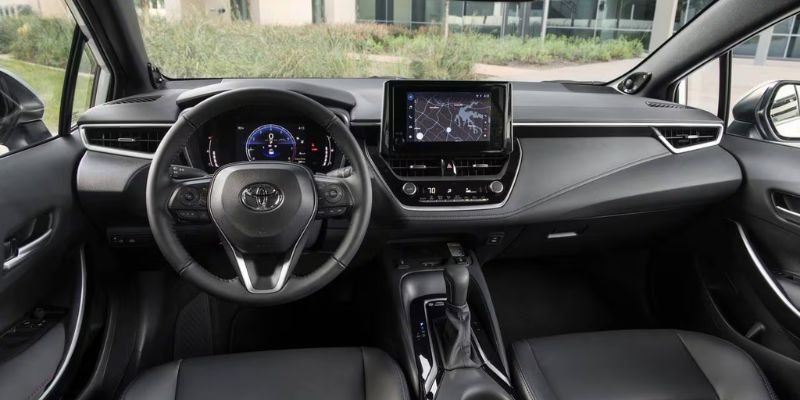
Sit inside the 2026 Corolla XLE and you notice immediately that Toyota has made deliberate material choices. The dashboard uses a two-tone layout with soft surfaces where your hands actually rest, and the overall build quality feels tight and rattle-free. Nothing flexes when you push on it, which sounds basic but is not universal in this price range.
The 8.0-inch touchscreen on the LE feels slightly small by 2026 standards. The SE and above get a 10.5-inch display, which is a meaningful upgrade for usability. Wireless CarPlay works consistently without the connectivity dropouts that some Hyundai and Kia owners have reported in forum discussions. Small detail, genuinely appreciated over thousands of daily uses.
Rear Seat Space: The Honest Limitation
The Toyota Corolla 2026 rear seat is comfortable for two adults on trips under an hour. Three adults across the rear bench is genuinely cramped, and rear legroom at 34.8 inches trails competitors like the Honda Civic at 37.4 inches and the Hyundai Elantra at 35.7 inches. Taller passengers will notice.
For buyers primarily carrying two rear passengers or using the back seat occasionally, this is not a dealbreaker. For families regularly transporting three adults or teenagers, it is worth a test drive to assess whether the space works for the people actually using it. Do not make assumptions based on class averages.
Cargo Space and Practicality
The Corolla offers 13.1 cubic feet of trunk space, which is below average for the compact sedan segment. The Honda Civic provides 14.8 cubic feet, and the Nissan Sentra offers 14.3 cubic feet. For most grocery runs and weekend bags, the Corolla trunk is sufficient. For road trips with checked-luggage-sized bags, it will test your packing discipline.
The trunk opening shape is reasonably wide, which helps with loading awkward items. Toyota has not offered a fold-flat rear seat option across all Corolla configurations, which limits cargo flexibility compared to hatchback alternatives. If cargo versatility matters regularly in your life, the Corolla Hatchback version at a similar price point solves that problem more satisfactorily.
Reliability and Long-Term Ownership Costs
This is where the 2026 Toyota Corolla review conversation shifts decisively in Toyota's favor. The Corolla consistently ranks among the most reliable vehicles in its segment according to owner satisfaction data and predicted reliability scores. Repair costs over a ten-year ownership period average significantly lower than segment competitors, partly due to Toyota's parts availability and straightforward maintenance intervals.
RepairPal estimates annual Corolla maintenance costs around $362 per year, compared to a segment average closer to $526. That $164 annual difference compounds over a decade to over $1,600 in additional savings beyond fuel costs. For genuine budget buyers who plan to own a vehicle for seven to ten years, the long-term cost of ownership [2] calculation strongly favors the Corolla over flashier alternatives with weaker reliability records.
How It Compares to Key Competitors
Against the Honda Civic, the Corolla loses on rear passenger space, engine refinement, and outright driving engagement, but wins on predicted reliability and standard safety features at base trim. Against the Hyundai Elantra, the Corolla wins on brand reliability reputation and resale value, but the Elantra offers more technology per dollar in mid-grade trims.
Against the Mazda3, the Corolla wins decisively on price and running costs but loses substantially on interior quality and driving feel. The Mazda3 is a better car to drive. The Corolla is a better car to own without thinking about it, which is a real and meaningful distinction for the buyers this car is designed to serve.
Insurance Costs and Financing Reality
The Toyota Corolla 2026 consistently attracts some of the lowest insurance premiums among compact sedans, partly due to its strong safety ratings and partly due to its moderate repair cost profile. Average annual insurance costs for the Corolla sit around $1,380 nationally, though this varies substantially by state, driving history, and coverage level.
On a 60-month financing term at current average auto loan rates [3], the LE trim at $22,050 with a 10 percent down payment produces a monthly payment around $390 at approximately 7.5 percent APR. The Hybrid SE at $26,850 under the same terms lands near $475 monthly. Both sit comfortably within the budget range for buyers targeting compact sedan ownership costs.
Who Should Actually Buy This Car
The Toyota Corolla 2026 is built for a specific kind of buyer: someone who wants a reliable, fuel-efficient compact sedan that starts around $22,000, costs almost nothing to maintain, and will still be running reliably a decade from now without drama. It is not built for enthusiasts, people who want to impress, or buyers who need maximum rear-seat space.
If you are a first-time buyer, a commuter logging 12,000 to 18,000 miles annually, or someone replacing a high-mileage vehicle and prioritizing low ongoing costs above everything else, the 2026 Toyota Corolla is one of the most rational decisions in the compact segment. It does exactly what it promises, every single time, which is rarer than it sounds at this price point.
Test drive the SE and the XLE back to back before deciding on a trim. The driving feel and comfort difference between them is significant enough to influence the decision for most buyers. Then check your local dealer inventory for any end-of-quarter incentives that can push the price further below sticker before you sign.
References
[1] Toyota Official Site – https://www.toyota.com
[2] U.S. Department of Energy Fuel Economy – https://www.fueleconomy.gov
[3] Federal Reserve – https://www.federalreserve.gov
Related Posts
Sedan or SUV What You Need to Know Before Deciding in 2026

How To Choose the Right Windshield Wipers for Your Car Model

How To Choose a Car Phone Holder That Won't Fall Off on Rough Roads

10 Must-Have Car Accessories for Rainy Season That Actually Keep You Safe
Toyota Camry 2026 vs Honda Accord 2026 Which Midsize Sedan Is the Better Buy